 I've been sitting here, The Twilight Zone on in the background, wondering what to say this morning. I stared at the keyboard, which just stared right back. It didn't judge or clear its throat or shuffle its feet or roll its eyes. It patiently waited until the idea congealed in my mind: the keyboard is ever patient, but it's always there. No matter how long I put it off, no matter how much TV I watch or Facebook I scan through (apparently there was an election of some sort recently), the keyboard is sitting quietly, waiting for me to move my fingers across it and, hopefully, make a little magic.
Sometimes the magic just doesn't come. There are words, but they're ordinary, pedestrian, even boring. But other times I write something, go back and read over it, and the hair on the back of my neck stands up. For that short period of time, for that paragraph or page or chapter, I've captured the lightning and put it on the screen. Whether anyone else would agree with my assessment is, at least for the moment, beside the point. I liked it. I believed, however briefly, that I could write and write well.
 That's the essence of writing in my mind. It's magical; it's mystical; it's elusive, kind of like those times when a memory or even just a word hovers just outside of our consciousness. We like to say it's on the tips of our tongues. Well, for writers, it's on the tips of our fingers. We keep clacking away on this never-absent keyboard in the hopes that it will come out. Sometimes it does and other times, well, it just doesn't.
But when it does, it's such a glorious experience. Not to over-dramatize it, but it really does feel, even if for just a little while, like we're seeing the world clearly. We understand. We hear the flutter of the angels' wings. It's transcendent and we hope it never goes away.
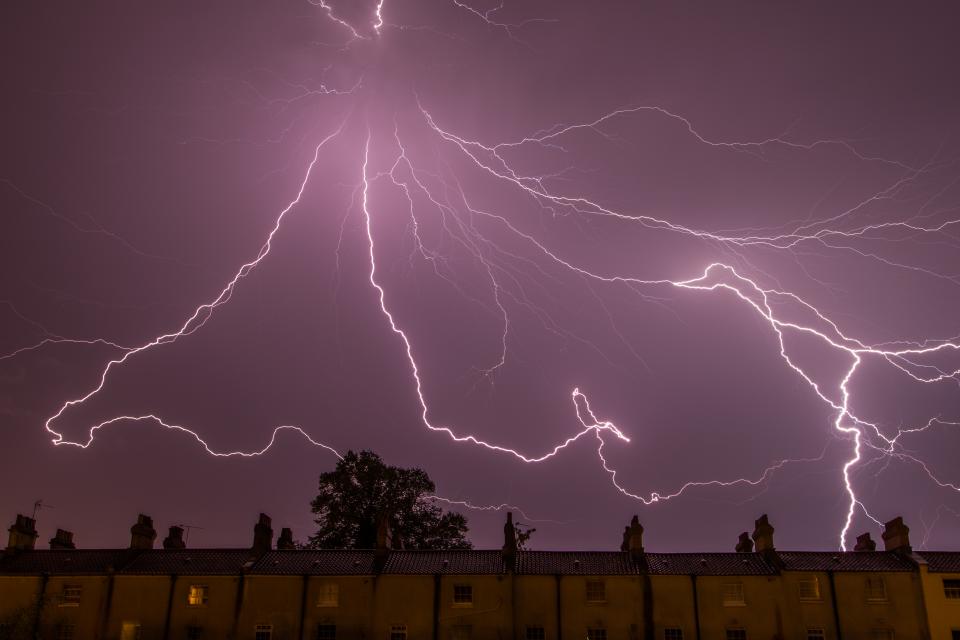 But it does go away. And that's a good thing. Otherwise, all writers would do is huddle in their writing nooks and write forever, becoming hermits, shutting ourselves from all human contact. We spend enough time doing that as it is, so it's probably best that those lightning moments are just that: they strike and then they're gone until the next one comes. It's in between the lightning that we do "normal" stuff, like eat and sleep and see movies with friends and go to church. But when you text us and we don't answer, look around. See a flash of light in the sky in the direction of our house? I bet I know what it is.


